
StealthGas Rallies 4.7% as Strong LPG Market, Rising Profits and Debt-Free Balance Sheet Impress Investors
StealthGas shares gained 4.7% on Friday after the LPG shipping company reported strong first-quarter 2026 results highlighted by rising profitability, a rapidly growing cash position, and continued strength in global liquefied petroleum gas transportation markets.
The company reported net income of $15.9 million, or $0.43 per share, up from $14.1 million, or $0.38 per share, a year earlier. Revenue increased 2% to $42.8 million despite operating a slightly smaller fleet, reflecting favorable charter market conditions and improved vessel earnings.
Investors appeared particularly encouraged by StealthGas' financial strength. The company ended the quarter with $131 million in cash and cash equivalents, a 32% increase from the previous quarter, while maintaining a fully debt-free fleet. Management noted that all vessels in its wholly owned fleet are unencumbered, providing significant financial flexibility at a time when many shipping companies continue to carry substantial leverage.
The company also continues to lock in future revenue visibility. Approximately 54% of fleet days for the remainder of 2026 are already secured under period charters, representing roughly $53 million of contracted revenue, while total contracted revenue across future periods stands at approximately $100 million.
Market conditions in the LPG shipping industry remain favorable. Management highlighted that geopolitical tensions in the Middle East, including disruptions around the Strait of Hormuz, have increased voyage distances and created volatility in global LPG trade flows. While overall shipment volumes have fluctuated, longer transportation routes have boosted ton-mile demand, supporting vessel utilization and charter rates.
StealthGas has also been actively optimizing its fleet. The company sold two vessels during 2026 and agreed to sell a third vessel later this year, generating approximately $26 million in additional proceeds that are expected to further strengthen liquidity. The strategy allows management to monetize older assets while maintaining exposure to attractive LPG shipping fundamentals.
The earnings report suggests that StealthGas is benefiting from a favorable combination of strong charter markets, disciplined fleet management, and a conservative balance sheet. With cash approaching $155 million currently, no debt, and substantial contracted revenues already secured, investors appear increasingly confident in the company's ability to capitalize on continuing strength in global LPG transportation markets.
Username: The Investor
User ID: The_Investor
Posts 5255
Videos 1599
Followers 0
Last 30 Days • Mini Statistics
Post Activites
Video Posts
Posts
G-III Apparel Jumps 5.2% as Strong Execution and Marc Jacobs Deal Fuel Investor Optimism
G-III Apparel Group shares rose 5.2% on Friday after the fashion company reported first-quarter fiscal 2027 results that exceeded expectations and raised its full-year earnings guidance, signaling confidence despite ongoing industry challenges.
The company generated net sales of $536 million, ahead of management's guidance, while reporting net income of $66.5 million, or $1.50 per share, compared with just $0.17 per share a year earlier. Investors were particularly encouraged by management's decision to raise fiscal 2027 earnings guidance following the stronger-than-expected quarter.
Although reported revenue declined 8% year over year, the market focused on improving profitability and the company's successful transition toward a more brand-driven business model. Excluding one-time tariff-related benefits, gross margin still expanded by 350 basis points, reflecting healthier full-price selling and improved product mix across its portfolio.
A major driver of investor enthusiasm was the recently announced acquisition of the iconic Marc Jacobs brand in partnership with WHP Global. Management described the transaction as a transformational step that accelerates G-III's evolution from a licensing-focused apparel company into a global brand owner. The acquisition is expected to strengthen the company's portfolio and create new growth opportunities across product categories, distribution channels, and international markets.
Investors also welcomed the company's strong balance sheet. Cash and cash equivalents increased to $394 million from $258 million a year earlier, while inventory levels declined 8%, suggesting disciplined inventory management and improved operational efficiency.
The earnings report comes as G-III navigates the loss of Calvin Klein and Tommy Hilfiger licenses, which are expected to reduce annual sales by roughly $470 million. Despite this headwind, management raised its fiscal 2027 earnings outlook, indicating confidence that owned brands and strategic acquisitions can offset much of that impact over time.
Friday's rally suggests investors are increasingly focused on the company's long-term transformation strategy rather than short-term revenue declines. With stronger margins, a healthy balance sheet, and the addition of Marc Jacobs, many shareholders appear to view G-III as emerging from a licensing transition into a more valuable brand-led growth story.
Alphabet Slips 1% as Broader Tech Weakness Overshadows Higher Price Target
Alphabet shares fell 1% on Friday, outperforming many large-cap technology peers but still ending lower as investors sold growth stocks following stronger-than-expected U.S. economic data and rising Treasury yields.
Despite the decline, Wall Street sentiment remained constructive. New Street Research raised its price target on Alphabet from $450 to $455 while maintaining a Buy rating, signaling continued confidence in the company's long-term growth prospects despite recent market volatility.
The target increase reflects optimism surrounding Alphabet's expanding artificial intelligence initiatives, strength in digital advertising, and growing cloud computing business. Investors have been closely watching how the company integrates AI across Google Search, YouTube, Google Cloud, and other products as competition intensifies throughout the technology sector.
Alphabet has faced concerns that generative AI could disrupt traditional search advertising, but the company has continued to demonstrate strong user engagement and has been aggressively rolling out AI-powered features across its ecosystem. At the same time, Google Cloud remains one of the fastest-growing segments of the business, benefiting from increasing enterprise demand for AI infrastructure and cloud services.
Friday's decline appeared largely driven by macroeconomic factors rather than company-specific developments. Following the release of strong U.S. employment data, investors reduced exposure to technology stocks as expectations for Federal Reserve rate cuts moved further into the future. Higher interest rates tend to pressure growth-stock valuations, particularly across the technology sector.
The fact that Alphabet fell only modestly while the Nasdaq dropped more than 4% may indicate that investors continue to view the company as one of the highest-quality names in the technology sector. The latest target increase from New Street Research further suggests that analysts remain confident in Alphabet's ability to capitalize on the AI revolution while maintaining its dominant position in digital advertising and cloud computing.
With a $455 price target compared with a recent share price around $369, Wall Street continues to see meaningful upside potential, even as short-term market volatility remains elevated.
Walmart Gains 1% as Investors Favor Defensive Stocks Despite Analyst Downgrade
Walmart shares rose 1% on Friday, outperforming the broader market as investors sought safety in defensive sectors during a sharp selloff that pushed major technology indexes significantly lower.
The gain came even as Erste Group Bank downgraded the stock from Buy to Hold. While downgrades often pressure shares, the market appeared more focused on Walmart's defensive characteristics and resilient business model amid growing economic uncertainty.
As concerns about higher-for-longer interest rates weighed heavily on technology and growth stocks, investors rotated into companies with stable earnings, strong cash flow, and consistent consumer demand. Walmart is widely viewed as one of the largest beneficiaries of this type of market environment due to its dominant position in grocery retailing and its ability to attract consumers across income levels.
The retailer has also strengthened its competitive position through investments in e-commerce, delivery services, advertising, and membership offerings. These higher-margin businesses have helped diversify revenue streams and improve profitability beyond traditional retail operations.
Friday's positive performance suggests investors remain confident in Walmart's ability to navigate a potentially slower economic environment. Historically, the company has performed relatively well during periods of economic uncertainty as consumers increasingly prioritize value and essential purchases.
The divergence between the analyst downgrade and the stock's gain highlights the current market dynamic. While some analysts may see more limited upside after Walmart's strong performance over recent years, investors continue to view the company as a high-quality defensive holding capable of delivering steady growth and earnings stability even as broader market volatility increases.
With interest-rate expectations remaining elevated and economic uncertainty persisting, Walmart's combination of scale, pricing power, and essential consumer exposure continues to make it an attractive destination for investors seeking stability in an increasingly turbulent market environment.
Palantir Falls 4.5% in Market Selloff Despite Analysts Reaffirming Bullish Views
Palantir Technologies shares fell 4.5% on Friday as a broad technology selloff swept through U.S. markets, even as Wall Street analysts continued to express confidence in the company's long-term prospects.
The stock's decline came amid one of the sharpest drops in technology shares this year, with investors reacting to stronger-than-expected U.S. employment data that pushed Treasury yields higher and reduced expectations for near-term Federal Reserve rate cuts. High-growth technology companies were among the hardest hit as investors reassessed valuations in a higher-rate environment.
Despite the market weakness, analysts remained firmly positive on Palantir. Wedbush analyst Dan Ives reiterated his Outperform rating and maintained a $230 price target, while Rosenblatt Securities analyst John McPeake reaffirmed a Buy rating with a $225 target. Both targets imply substantial upside from the stock's closing price near $136.
The bullish stance reflects continued optimism surrounding Palantir's position in the rapidly expanding artificial intelligence market. The company has emerged as one of the most visible beneficiaries of enterprise AI adoption, with its Artificial Intelligence Platform (AIP) helping businesses and government agencies deploy AI applications using their own data. Strong demand from both commercial and government customers has fueled rapid revenue growth and improved profitability over the past year.
Oracle Drops 9% in Tech Rout Despite Continued Wall Street Optimism
Oracle shares plunged nearly 10% on Friday, closing at $213.41 as investors aggressively sold technology stocks following stronger-than-expected U.S. employment data and rising Treasury yields. The decline came despite a series of bullish analyst updates that underscore Wall Street's confidence in Oracle's long-term AI and cloud computing opportunities.
Several firms reaffirmed positive views on the company during the week. Guggenheim analyst John DiFucci maintained a Buy rating, while BTIG Research also reiterated its Buy recommendation with a notably bullish $400 price target. Meanwhile, Cantor Fitzgerald raised its price target from $229 to $284 and maintained an Overweight rating, signaling growing confidence in Oracle's growth trajectory.
The contrast between Friday's sharp decline and the optimistic analyst commentary highlights the market's current focus on macroeconomic factors rather than company-specific fundamentals. Higher interest rates tend to weigh on technology valuations, particularly among companies expected to generate a significant portion of their growth in future years.
Airbnb Falls in After-Hours Trading Despite Positive Analyst Coverage
Airbnb shares finished Friday's regular session nearly unchanged, slipping just 0.13% to $133.54, significantly outperforming the broader market as the Nasdaq plunged more than 4%. However, the stock came under pressure after the close, falling approximately 1% in after-hours trading.
The company received supportive analyst commentary during the day. CICC Research initiated coverage with an Outperform rating and a $165 price target, while Jefferies set a $160 price target. Both targets suggest substantial upside from current levels and reflect confidence in Airbnb's long-term growth prospects.
Despite the positive analyst sentiment, Airbnb's after-hours weakness likely reflected the broader risk-off environment affecting growth-oriented stocks. Following stronger-than-expected U.S. employment data, investors reduced exposure to sectors sensitive to interest rates as expectations for Federal Reserve rate cuts moved further into the future.
Even with the after-hours decline, Airbnb demonstrated relative strength compared with many technology and growth stocks during Friday's market selloff. Investors continue to view the company as a leading player in global travel, supported by its strong brand, asset-light business model, and ability to generate significant cash flow without the capital requirements faced by traditional hotel operators.
The contrasting moves—positive analyst ratings but weaker after-hours trading—highlight the current market environment, where macroeconomic concerns and interest-rate expectations are often outweighing company-specific developments. Nevertheless, the analyst targets suggest Wall Street remains optimistic that Airbnb can continue benefiting from long-term travel demand and expanding global adoption of its platform.
Apple Outperforms Broader Market Selloff as Investors Remain Confident in Long-Term Outlook
Apple declined just 1.2% on Friday and gained an additional 0.1% in after-hours trading, significantly outperforming the broader technology sector during a session that saw the Nasdaq plunge more than 4%.
The relative strength suggests investors continue to view Apple as one of the safer large-cap technology holdings amid increasing market volatility. While high-growth semiconductor and AI-related stocks came under heavy pressure following stronger-than-expected U.S. employment data and rising Treasury yields, Apple's more defensive business model helped limit selling pressure.
Investor sentiment may also have been supported by continued optimism surrounding Apple's artificial intelligence strategy, upcoming product cycle, and massive cash generation capabilities. Unlike many AI-linked companies that trade at elevated growth valuations, Apple benefits from a large installed base of loyal customers, recurring services revenue, and one of the strongest balance sheets in corporate America.
A research note circulating in the market showed Wedbush analyst Dan Ives maintaining an Outperform rating on Apple with a $400 price target, implying substantial upside from current levels. Dan Ives has remained one of Wall Street's most bullish Apple analysts, frequently highlighting the company's AI opportunities, ecosystem strength, and potential for a multi-year upgrade cycle driven by AI-enabled devices.
The stock's ability to hold relatively steady while the Nasdaq suffered one of its sharpest declines in over a year may indicate that investors are rotating toward higher-quality technology companies as concerns grow about interest rates remaining elevated for longer. In an environment where speculative growth stocks face increasing pressure, Apple appears to be benefiting from its reputation as a technology leader with durable earnings, strong free cash flow, and resilient consumer demand.
While broader market volatility may continue in the near term, Friday's trading demonstrated that investors remain willing to own Apple even during periods of significant weakness across the technology sector.
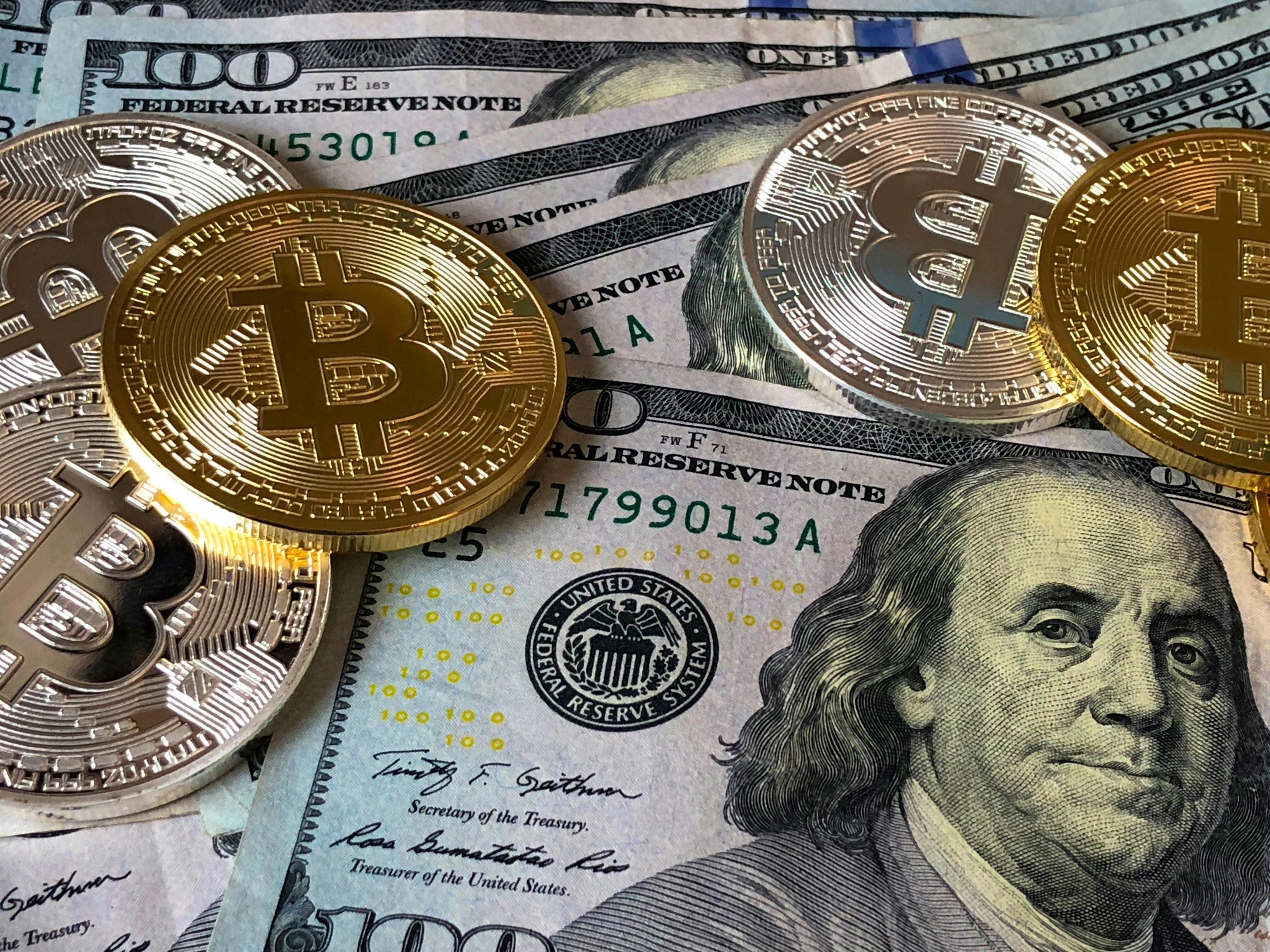
Bitcoin Slides 14% in Five Days as Capital Shifts Toward New Tech Opportunities and Higher Rates
Bitcoin has fallen roughly 14% over the past five days, extending a difficult period for the cryptocurrency market as investors navigate rising interest rates, shifting liquidity conditions and growing competition for capital from the technology sector.
The decline comes after stronger-than-expected U.S. economic data reinforced expectations that interest rates could remain elevated for longer. Higher Treasury yields and a stronger U.S. dollar have reduced the appeal of speculative assets, including cryptocurrencies, as investors seek safer alternatives with increasingly attractive yields.
At the same time, capital markets have been increasingly focused on a new wave of technology fundraising activity and anticipated initial public offerings. Investor attention has shifted toward artificial intelligence, space technology, robotics and advanced semiconductor companies, sectors that have attracted enormous amounts of capital over the past year. Market speculation surrounding potential blockbuster listings, including a possible future SpaceX IPO and other high-profile private technology companies, has contributed to a rotation of risk capital away from cryptocurrencies and toward equity opportunities that many investors view as offering more tangible growth prospects.
The technology sector has also become the primary destination for global investment flows as governments, corporations and institutional investors pour hundreds of billions of dollars into AI infrastructure, data centers and next-generation computing platforms. As a result, cryptocurrencies are increasingly competing with rapidly growing technology companies for the same pool of speculative and growth-oriented capital.
Another factor weighing on Bitcoin has been broader risk aversion across financial markets. Recent volatility in U.S. equities, uncertainty surrounding global growth, and concerns about inflation have encouraged investors to reduce exposure to higher-risk assets.
While the recent selloff has been severe, many analysts note that Bitcoin remains one of the most volatile major asset classes. In the near term, market direction will likely depend on Federal Reserve policy expectations, liquidity conditions and whether investors continue to favor technology and AI-related investments over digital assets. For now, the flow of capital appears to be moving toward traditional equity markets and emerging technology opportunities, creating additional pressure on cryptocurrency prices.
Gold and Oil Retreat as Strong U.S. Jobs Data Shifts Market Focus Toward Interest Rates
Gold and crude oil prices both moved sharply lower on Friday as investors reacted to a stronger-than-expected U.S. employment report
Gold futures for August delivery fell 3.1% to $4,365 per ounce, marking one of the metal's weakest sessions in recent months. The decline followed the release of May U.S. nonfarm payrolls, which showed the labor market remains significantly stronger than expected. The robust jobs data reduced expectations for Federal Reserve rate cuts and pushed Treasury yields and the U.S. dollar higher, creating a headwind for non-yielding assets such as gold.
Brent crude oil also declined, falling 2.0% to $93.09 per barrel. Progress in diplomatic discussions helped ease immediate supply fears, even though the Strait of Hormuz remains a major source of uncertainty for global energy markets.
The pullback in both markets reflects a broader shift in investor psychology. For much of 2026, gold and oil benefited from geopolitical tensions and supply concerns. However, Friday's trading showed that macroeconomic factors remain dominant. A stronger U.S. economy increases the likelihood that the Federal Reserve will keep interest rates elevated, supporting the dollar to fight against inflation while reducing demand for safe-haven assets such as gold.
Despite the declines, underlying geopolitical risks remain significant. Global oil inventories continue to tighten, and any renewed escalation in the Middle East could quickly reverse the recent weakness in energy markets. Meanwhile, gold remains substantially higher than a year ago.