US

US Stocks Extend Rally as Strong Economic Data Offsets Geopolitical Concerns

US equities traded higher on the day, with the S&P 500 rising 0.66% to 7,454.76, the Dow Jones Industrial Average gaining 0.70% to 51,139.50, and the Nasdaq advancing 0.67% to 26,104.48 as investors responded positively to a series of encouraging economic reports.

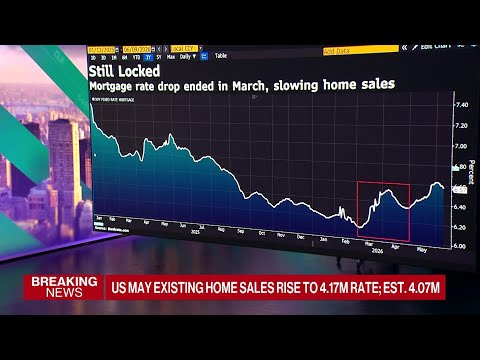
The latest macroeconomic data painted a picture of a US economy that remains resilient. Existing home sales climbed 3.2% in May to an annualized rate of 4.17 million units, comfortably beating expectations and signaling that housing demand remains healthy despite elevated mortgage rates. Earlier in the day, the US trade deficit also narrowed more than expected, providing a modest boost to growth expectations.

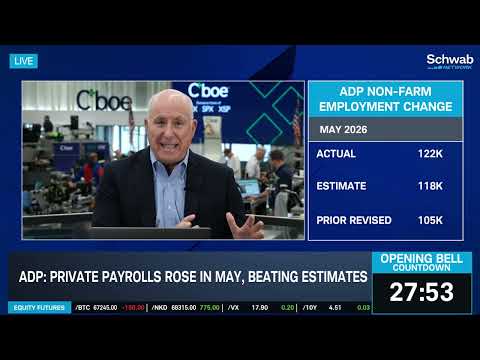
While the labor market showed some signs of cooling, with ADP employment growth slowing to 29,000, investors appeared to view the softer hiring data as supportive for potential Federal Reserve rate cuts later this year rather than as a sign of economic weakness.

Market sentiment was further supported by continued optimism surrounding artificial intelligence investment and strong technology-sector momentum, which has helped drive the Nasdaq to fresh highs. At the same time, investors remain closely focused on developments in the Middle East and energy markets. Although geopolitical tensions continue to create uncertainty, the absence of a major escalation has allowed risk appetite to remain intact.

Overall, today's market action reflects growing confidence that the US economy may be achieving a rare balance of moderating inflation, resilient growth, and a gradually cooling labor market—a combination that could support both corporate earnings and a more accommodative monetary policy outlook in the months ahead.
US Existing Home Sales Rebound Strongly in May, Beating Expectations

US existing home sales rose more than expected in May, signaling resilience in the housing market despite elevated mortgage rates and affordability challenges.

Sales increased to an annualized pace of 4.17 million units, surpassing economists' expectations of 4.07 million and improving from April's 4.04 million pace. On a monthly basis, existing home sales climbed 3.2%, significantly stronger than the previous month's 0.7% increase.
US Trade Deficit Narrows Slightly in April

The US trade deficit narrowed modestly in April, coming in at $55.9 billion, compared with expectations of a $56.2 billion deficit and an adjusted $56.6 billion deficit in the previous month.
US Private-Sector Hiring Slows as ADP Employment Growth Misses Expectations

US private-sector hiring slowed in the latest ADP weekly employment report, with employers adding 29,000 jobs, below the previous reading of 35,750.
US Consumer Inflation Expectations Ease in May, Offering Relief to Fed

U.S. consumers’ one-year inflation expectations fell to 3.5% in May from 3.6% in April, according to the latest survey from the New York Federal Reserve.
US Stocks Rebound as Tech Leads Recovery Despite Oil Surge and Middle East Tensions

U.S. stocks moved higher today, recovering part of Friday's losses as investors returned to technology shares and looked past rising oil prices and escalating tensions in the Middle East. The S&P 500 gained 0.65%, the Dow Jones Industrial Average rose 0.36%, and the Nasdaq outperformed with a 0.95% advance.

The rally follows a sharp selloff at the end of last week after stronger-than-expected U.S. employment data pushed Treasury yields higher and reduced expectations for Federal Reserve interest rate cuts. However, investors appeared more focused on economic resilience than on the prospect of higher rates, helping support a broad market rebound.

Technology stocks led the advance as enthusiasm surrounding artificial intelligence infrastructure and data center spending remained intact. Investors continue to favor companies expected to benefit from long-term AI investment trends, which have become one of the market's strongest growth themes.

The gains came despite a sharp rise in energy prices. Brent crude climbed around 2% as escalating tensions between Israel and Iran raised concerns about potential supply disruptions in the Middle East. Higher oil prices could add inflationary pressure and complicate the Federal Reserve's policy outlook, but those concerns were largely overshadowed by risk-on sentiment across equity markets.

Investors will now turn their attention to upcoming inflation data for further clues about the path of interest rates. For now, Wall Street appears focused on economic strength, AI-driven growth opportunities, and bargain hunting following Friday's pullback.
U.S. Stocks Suffer Sharp Selloff as Strong Jobs Data and Rate Fears Hit Tech Sector

U.S. markets closed sharply lower on Friday, with the S&P 500 falling 2.64%, the Dow Jones Industrial Average losing 1.35%, and the Nasdaq plunging 4.18% in its worst session since April 2025. The selloff ended a nine-week winning streak for the benchmark index.

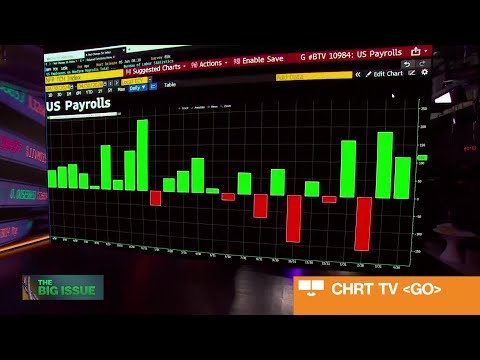
The primary catalyst was a stronger-than-expected U.S. employment report. Nonfarm payrolls increased by 172,000 in May, well above expectations, while the unemployment rate held steady at 4.3%. The data reinforced the view that the labor market remains resilient despite higher interest rates and recent economic uncertainty.

While strong economic growth is generally positive, investors interpreted the report as reducing the likelihood of Federal Reserve rate cuts later this year. Markets are now increasingly concerned that persistent inflation and a strong labor market could keep monetary policy restrictive for longer.

Technology and semiconductor stocks led the decline. The AI sector came under particular pressure after disappointing guidance from Broadcom earlier in the week sparked concerns that the pace of AI-related spending growth may be moderating. Major chipmakers including Nvidia, AMD, Intel, Broadcom, Micron and Marvell posted steep losses, dragging the Nasdaq sharply lower.

Investor sentiment was also weighed down by ongoing Middle East tensions and elevated oil-market uncertainty. Disruptions around Iran and the Strait of Hormuz could keep energy prices volatile, potentially adding further inflationary pressure at a time when the Federal Reserve remains focused on price stability.

Despite the sharp decline, major indexes remain significantly higher than a year ago. However, Friday's trading highlighted how sensitive markets have become to economic data that could alter expectations for Federal Reserve policy and the sustainability of the AI-driven market rally.
US Markets Diverge as Dow Surges While Tech Stocks Retreat Following Broadcom Selloff

U.S. stocks are trading with a sharply divided tone today. The Dow Jones Industrial Average is up 1.5% to 51,466, while the S&P 500 is slightly negative and the Nasdaq has fallen nearly 0.9%. The primary driver behind the weakness in technology shares is the post-earnings selloff in Broadcom, one of the market's most important AI infrastructure companies.

Broadcom (AVGO) reported another strong quarter, with revenue rising 48% year-over-year to $22.2 billion and AI semiconductor revenue surging 143% to $10.8 billion. The company also guided for approximately $16 billion in AI chip revenue next quarter. Under normal circumstances, these figures would be considered exceptional. However, investors had priced in even more aggressive growth expectations following the stock's massive rally over the past year.

As a result, Broadcom shares plunged roughly 14-15% after earnings despite beating many financial expectations. Investors focused on management's decision not to raise its long-term AI revenue target and on AI revenue guidance that came in slightly below the market's most optimistic forecasts. The reaction highlights how demanding expectations have become for AI-related stocks.

The Broadcom decline has weighed on the broader semiconductor sector, triggering profit-taking in other AI and chip names including Nvidia, AMD, Marvell and Micron. Since semiconductors carry significant weight within the Nasdaq and major technology indexes, weakness in the group is dragging the broader technology sector lower.

At the same time, today's labor market data offered a mixed signal. Initial Jobless Claims rose to 225,000 from 212,000 previously and exceeded expectations of 214,000, suggesting some moderation in hiring conditions. However, Continuing Claims declined slightly to 1.777 million, indicating that the labor market remains relatively resilient. The data supports the view that economic growth is slowing gradually rather than deteriorating sharply.

Meanwhile, investors continue to monitor Middle East developments and energy markets. Elevated oil prices remain a concern because sustained strength in crude could keep inflation pressures alive and complicate the Federal Reserve's path toward additional rate cuts. These concerns have encouraged some investors to rotate away from high-valuation growth stocks and toward industrial, financial and defensive sectors, helping the Dow significantly outperform the Nasdaq.

Today's market action does not necessarily signal a broader loss of confidence in the AI theme. Instead, it reflects how difficult it has become for mega-cap technology and semiconductor companies to exceed already lofty expectations. Broadcom's results demonstrated powerful AI demand, but the market's reaction suggests investors are becoming increasingly selective and demanding stronger evidence that the extraordinary AI spending boom can continue accelerating from current levels.
US labor data is mildly mixed but leans slightly negative.

Initial jobless claims rose to 225K, above the 214K forecast and previous 212K. This suggests layoffs picked up more than expected, though the level is still not alarming historically.

Continuing claims came in at 1.777M, slightly below the 1.780M forecast and down from 1.785M.
U.S. Services Sector Accelerates While Massive Oil Inventory Draw Supports Energy Markets

Fresh U.S. economic data painted a surprisingly resilient picture of the American economy on Wednesday, with the services sector expanding faster than expected while crude oil inventories posted a much larger-than-anticipated decline.

The ISM Non-Manufacturing PMI, one of the most closely watched indicators of U.S. economic activity, rose to 54.5 in May from 53.6 in April and exceeded forecasts of 53.7. Since services account for roughly 80% of U.S. economic output, the report suggests that economic activity remains healthy despite concerns about slowing growth and the impact of higher interest rates.

The stronger-than-expected reading follows an earlier ADP employment report that also beat expectations, reinforcing the view that the U.S. economy continues to demonstrate resilience. The combination of solid hiring and expanding service-sector activity reduces fears of an imminent economic slowdown and supports the narrative of a soft landing.

At the same time, the ISM Prices Paid component fell to 71.3 from 70.7 and missed expectations of 72.3. While still elevated, the softer inflation reading offers some encouragement that price pressures are not accelerating despite continued economic growth. For the Federal Reserve, this combination of healthy activity and easing price pressures is likely viewed favorably.

Energy markets received an additional boost from the latest inventory data. U.S. crude oil inventories fell by 7.97 million barrels, nearly three times larger than the expected 2.9 million-barrel decline and far exceeding the previous week's 3.33 million-barrel draw. The large inventory reduction suggests stronger demand and provides fundamental support for crude oil prices.

The inventory draw comes at a time when oil markets are already closely monitoring geopolitical tensions in the Middle East and potential supply risks. Combined with today's stronger economic data, the report supports the view that global energy demand remains relatively robust.

For financial markets, the data create a mixed but generally constructive picture. Stronger economic growth is positive for corporate earnings and overall risk sentiment, while lower-than-expected services inflation helps ease concerns that the Federal Reserve may need to maintain restrictive monetary policy for longer.

Overall, today's reports suggest the U.S. economy remains in solid shape, with consumer and business activity continuing to expand while energy demand remains strong. The data reinforce the view that growth is slowing only gradually rather than entering a sharp downturn, a scenario that remains supportive for both equities and commodity markets.
Video Thumbnail
06-09-26Global Finance News
Video Thumbnail
06-06-26The Investor
Video Thumbnail
06-05-26Global Finance News
Video Thumbnail
06-04-26European Investor
Video Thumbnail
06-03-26Global Finance News