


COINBASE:BTCUSD

Bitcoin Slides 14% in Five Days as Capital Shifts Toward New Tech Opportunities and Higher Rates

Bitcoin has fallen roughly 14% over the past five days, extending a difficult period for the cryptocurrency market as investors navigate rising interest rates, shifting liquidity conditions and growing competition for capital from the technology sector.

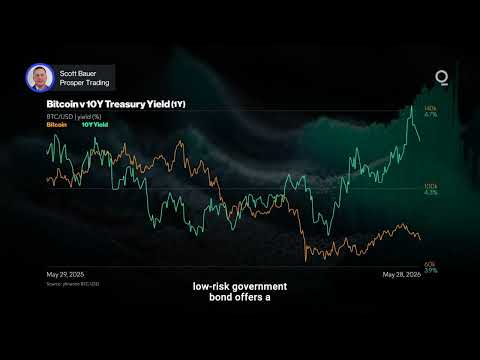
The decline comes after stronger-than-expected U.S. economic data reinforced expectations that interest rates could remain elevated for longer. Higher Treasury yields and a stronger U.S. dollar have reduced the appeal of speculative assets, including cryptocurrencies, as investors seek safer alternatives with increasingly attractive yields.

At the same time, capital markets have been increasingly focused on a new wave of technology fundraising activity and anticipated initial public offerings. Investor attention has shifted toward artificial intelligence, space technology, robotics and advanced semiconductor companies, sectors that have attracted enormous amounts of capital over the past year. Market speculation surrounding potential blockbuster listings, including a possible future SpaceX IPO and other high-profile private technology companies, has contributed to a rotation of risk capital away from cryptocurrencies and toward equity opportunities that many investors view as offering more tangible growth prospects.

The technology sector has also become the primary destination for global investment flows as governments, corporations and institutional investors pour hundreds of billions of dollars into AI infrastructure, data centers and next-generation computing platforms. As a result, cryptocurrencies are increasingly competing with rapidly growing technology companies for the same pool of speculative and growth-oriented capital.

Another factor weighing on Bitcoin has been broader risk aversion across financial markets. Recent volatility in U.S. equities, uncertainty surrounding global growth, and concerns about inflation have encouraged investors to reduce exposure to higher-risk assets.

While the recent selloff has been severe, many analysts note that Bitcoin remains one of the most volatile major asset classes. In the near term, market direction will likely depend on Federal Reserve policy expectations, liquidity conditions and whether investors continue to favor technology and AI-related investments over digital assets. For now, the flow of capital appears to be moving toward traditional equity markets and emerging technology opportunities, creating additional pressure on cryptocurrency prices.
Bitcoin Slides as Risk Appetite Weakens Following Tech Selloff and Rising Market Uncertainty

Bitcoin fell nearly 4% today, dropping to around $64,300 and extending a volatile week for the cryptocurrency market. The decline comes as investors reduce exposure to risk assets amid a broad selloff in technology stocks, concerns about global growth, and ongoing geopolitical uncertainty.

One of the biggest catalysts behind today's weakness was the sharp post-earnings decline in Broadcom. Shares of the AI chip giant plunged more than 13% after investors reacted negatively to its outlook despite another strong quarter. The selloff spread across the semiconductor sector, dragging down Nvidia, AMD, Marvell and other technology names that have been at the center of the artificial intelligence investment boom. As enthusiasm surrounding AI stocks cools, speculative assets such as cryptocurrencies are also coming under pressure.

Bitcoin has increasingly traded like a high-beta technology asset during periods of market stress. When investors become more cautious and move away from growth stocks, cryptocurrencies often experience even larger swings. Today's decline reflects that dynamic as capital rotates toward safer assets such as gold, which gained more than 1% during the session.

The macroeconomic backdrop has also become more challenging. U.S. Initial Jobless Claims rose to 225,000, above expectations, adding to concerns that economic momentum may be slowing. Additional pressure has come from continued outflows from crypto investment products and concerns about large-holder selling activity.

Despite today's weakness, some analysts remain constructive on Bitcoin's longer-term outlook. Institutional adoption, expanding crypto infrastructure and a potentially more favorable regulatory environment could support prices over time. However, in the near term, Bitcoin appears highly sensitive to movements in technology stocks, interest-rate expectations and overall investor risk appetite. As long as uncertainty remains elevated, volatility is likely to remain a defining feature of the cryptocurrency market.
Bitcoin Falls as Stronger U.S. Economic Data Dampens Rate-Cut Hopes

Bitcoin traded about 1.5% lower on Wednesday, slipping to around $66,900 as investors reacted to stronger-than-expected U.S. economic data and a modest increase in risk aversion across financial markets.

The decline followed the release of the ADP employment report, which showed U.S. private employers added 122,000 jobs in May, slightly above expectations. The data reinforced the view that the U.S. economy remains resilient, reducing pressure on the Federal Reserve to cut interest rates aggressively in the near term. Higher-for-longer interest rates tend to be a headwind for cryptocurrencies because they increase the attractiveness of yield-bearing assets such as bonds and money market funds.

Broader market sentiment was also cautious. U.S. equity indexes moved lower during the session, while investors continued to monitor geopolitical tensions involving Iran, energy market volatility, and uncertainty surrounding global economic growth. These factors have encouraged some investors to reduce exposure to higher-risk assets.

Unlike previous periods when Bitcoin declines were driven by profit-taking after large rallies, today's weakness appears more closely tied to macroeconomic developments and shifting interest-rate expectations. Market participants are increasingly focused on upcoming economic releases, particularly Friday's U.S. nonfarm payrolls report, which could significantly influence expectations for Federal Reserve policy over the coming months.

Despite the pullback, Bitcoin continues to benefit from several longer-term structural drivers, including institutional adoption, spot Bitcoin ETF demand, and growing integration of digital assets into traditional financial markets. However, in the near term, crypto markets remain highly sensitive to interest-rate expectations and broader risk sentiment.

For now, traders appear to be taking a more cautious stance ahead of key economic data, with Bitcoin moving lower alongside other risk assets as markets reassess the timing and magnitude of potential Federal Reserve rate cuts later this year.
Bitcoin Slides More Than 4% as Geopolitical Risks and ETF Outflows Weigh on Sentiment

Bitcoin fell more than 4% today, dropping to around $68,300 and reaching its lowest level in several weeks as investors pulled back from risk assets amid growing geopolitical tensions and continued selling pressure across the crypto market.

A major factor behind the decline is rising uncertainty surrounding the conflict between the United States and Iran. Escalating tensions have increased demand for traditional safe-haven assets while reducing appetite for riskier investments such as cryptocurrencies.

Investor sentiment has also been pressured by persistent outflows from Bitcoin investment products. Recent reports indicate that Bitcoin ETFs have experienced billions of dollars in withdrawals in recent weeks, suggesting that institutional investors have become more cautious toward the asset class. Economic Times reported that Bitcoin-related ETFs have seen more than $2 billion in outflows.

Another headwind has been the continued rotation of capital toward artificial intelligence and technology stocks. While Nvidia, Marvell, and other AI-linked companies have rallied sharply, Bitcoin has struggled to attract fresh inflows.

Despite today's weakness, Bitcoin remains well above levels seen earlier this year. However, traders are now watching whether the cryptocurrency can stabilize near the $68,000-$70,000 range as markets continue to assess geopolitical developments, institutional demand, and broader risk sentiment.
Bitcoin Stuck in No Man's Land as Geopolitics and Inflation Data Crowd Out Crypto Narrative

Bitcoin is trading near $77,200 on Friday, essentially unchanged for the week, in a session that captures the cryptocurrency's peculiar predicament in the current market environment — despite recent positive regulatory developments related to the Clarity Act, Bitcoin has shown little excitement, largely unchanged over the past 24 hours and for the week, as the current state of financial markets is best described as macro-geopolitics first, crypto second.

Today's Michigan data did Bitcoin no favors. One-year inflation expectations jumping to 4.8% and five-year expectations surging to 3.9% reinforce the higher-for-longer rate narrative that has been the single biggest headwind for risk assets, including crypto, since the Iran conflict began in late February. With the probability of a June rate cut sitting at just 2.6%, speculative capital has little incentive to rotate aggressively into Bitcoin when elevated Treasury yields offer a meaningful alternative return.

Oil has reclaimed control of the macro narrative, with every major asset class now reacting directly to geopolitical headlines. The Strait of Hormuz remains the central organizing fact of global markets — disrupting oil supply, driving inflation expectations higher, pushing bond yields up and compressing the appetite for non-yielding assets. Bitcoin, like gold, finds itself caught in that crossfire, though it is navigating the environment differently.

The structural backdrop is genuinely supportive. US spot Bitcoin ETFs pulled in approximately $2.44 billion during April 2026, a peak so far this year, with BlackRock's IBIT and Fidelity's FBTC driving the bulk of inflows. ETFs are absorbing approximately 4,500 to 5,000 BTC daily against a mined supply of merely 450 BTC — a 10:1 ratio that would be powerfully price-supportive in isolation. That structural demand from institutional buyers is the reason Bitcoin has held above $75,000 even as the macro environment has remained deeply challenging.

The Clarity Act, passed recently, represents a genuine long-term positive for the asset class by providing the regulatory clarity that institutional investors have demanded before making larger allocations. Yet even that positive news has been absorbed without generating meaningful upside momentum — a sign of how completely the Iran conflict and its inflationary consequences have dominated investor attention.

Analysts have repeatedly emphasized that Bitcoin needs marked improvement in macro conditions before a sustained rally can take hold, with key support sitting at $75,000 and $74,300, while $82,000, $85,000 and ultimately $90,000 represent the hurdles on the upside.

The longer-term institutional outlook remains bullish. Financial Institutions continue to point to Bitcoin's growing role as a digital store of value and inflation hedge, with year-end targets ranging from $90,000 to well above $100,000 contingent on macro stabilization. The halving cycle dynamics, sustained ETF demand and improving regulatory environment all point in the same direction over a 12-month horizon.

For now though, Bitcoin is waiting for the same thing that gold, equities and bond markets are waiting for — a definitive resolution to the Iran conflict that allows oil prices to normalize, inflation expectations to fall back and the Fed to regain the flexibility to consider rate cuts. Until that moment arrives, Bitcoin will likely continue trading in its current compressed range, unloved in the short term but structurally well-supported beneath the surface.
Bitcoin Climbs 3% as CLARITY Act Vote and Institutional Demand Align
May 14, 2026

Bitcoin is pushing back above $80,000 today, up approximately 3%, with three forces converging simultaneously to drive the move.

The most immediate catalyst is the CLARITY Act. The bill is facing a critical Senate committee markup vote today, with crypto markets pricing in a 60-65% probability of clean passage. A successful vote generates an immediate bid, while a stall effectively ends the bill's 2026 window ahead of the Memorial Day recess. (Disruption Banking) For an industry that has waited years for regulatory clarity, today's vote carries outsized significance.

On the demand side, the institutional bid remains firm. US spot Bitcoin ETFs pulled in approximately $2.44 billion in April alone — the highest monthly inflow this year — while large holders added around 270,000 BTC over the April-May period. (Bitcoin Foundation)

The broader market backdrop is also helping. The same risk-on tone lifting equities today — driven by the Trump-Xi summit in Beijing and hopes around technology trade agreements — is finding its way into crypto. A softening dollar adds further support.

Analysts are targeting $86,500 by end of May if institutional participation holds its current pace. (CoinDCX) With regulatory, structural, and macro tailwinds aligning on the same day, today's 3% move looks less like a spike and more like a continuation.

Talk Your Book: What's the Latest in Crypto? - A Wealth of Common Sense

On today's Talk Your Book, we talk to Krista Lynch from Grayscale about crypto legislation, stablecoins, ETFs, in-kind creations and more.

(awealthofcommonsense.com)

Bitcoin March 9 daily chart alert - Choppy, sideways trading | Kitco News

The Kitco News Team brings you the latest news, videos, analysis and opinions regarding Precious Metals, Crypto, Mining, World Markets and Global Economy.

(kitco.com)

Bitcoin drops below $67,000 as Iran conflict uncertainty persists

Bitcoin traded near $66,000 on Sunday after recovering from an initial sell-off in the wake of US-Israel strikes on Iran.

(finance.yahoo.com)

CLARITY Weekend Showdown vs Banks!!!???? - YouTube

The long-awaited Digital Asset Market CLARITY Act (H.R.3633) is stuck in a tense stalemate. On Thursday, February 19, the White House convened its third roun...

(youtu.be)
Video Thumbnail
06-08-26WS News
Video Thumbnail
06-06-26The Investor
Video Thumbnail
06-06-26The Investor
Video Thumbnail
06-06-26The Investor
Video Thumbnail
06-06-26The Investor